
Heshan Black Tea(鹤山红茶), a specialty of Heshan City, Guangdong Province, holds a National Agricultural Product Geographical Indication designation.
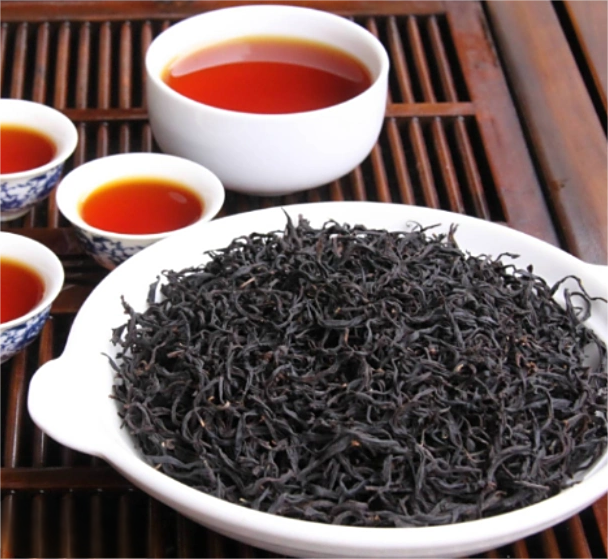
Heshan Black Tea features oval or oblong leaves with serrated edges and a verdant underside. Once brewed, the tea develops dense, slender strands, a dark, rich color, and a mellow, fragrant aroma that penetrates the lungs. After brewing, the tea develops a rosy red color with a visible golden ring around the edge, creating a smooth, sweet, and refreshing drink.
On November 5, 2015, the former Ministry of Agriculture of the People's Republic of China approved the registration and protection of "Heshan Black Tea" as a National Agricultural Product Geographical Indication. On June 9, 2025, the State Intellectual Property Administration designated "Heshan Black Tea" as a Geographical Indication product and implemented protection.
Xinhui dried tangerine peel新会陈皮, a specialty of Xinhui District, Jiangmen City, Guangdong Province, is a Chinese National Geographical Indication product.
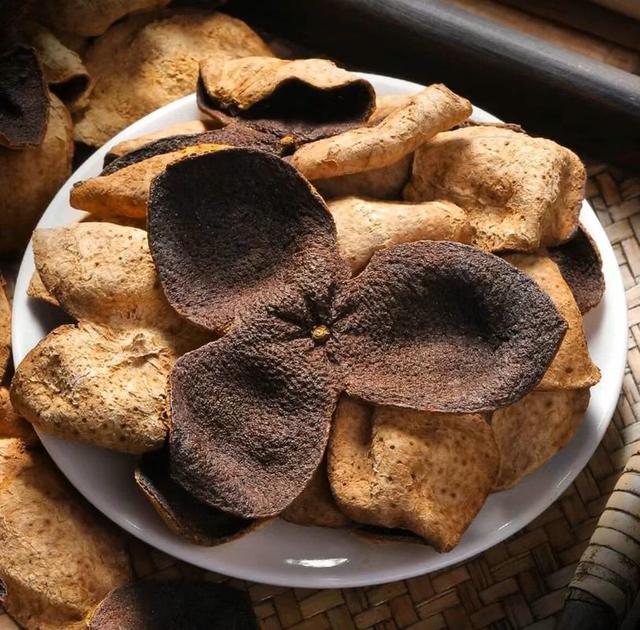
The most remarkable thing about Xinhui dried tangerine peel (tea-branch tangerine) is that it "grows the skin but not the flesh, and the skin is sweet but the flesh is not." Since ancient times, it has been believed that "the essence lies in the skin," and that "the skin is expensive, the flesh cheap." Since the Song Dynasty, the people of Xinhui have cultivated tangerine peels for their peels. The peel is sweet and fragrant, while the flesh is dry and astringent, making it inedible. The prescription "Erchen Decoction" prescribed by the renowned Qing Dynasty physician Ye Tianshi specifically mentions "Xinhui peel." Xinhui dried tangerine peel has a high medicinal value and is a traditional spice and seasoning, earning it a high reputation. As early as the Song Dynasty, it became a "Guangdong commodity" in the North-South trade, exported throughout China, Southeast Asia, and the Americas. On October 25, 2006, the former General Administration of Quality Supervision, Inspection and Quarantine approved "Xinhui dried tangerine peel" for geographical indication product protection. On November 15, 2019, it was included in the Chinese Agricultural Brand Catalogue.
Taishan mud crabs台山青蟹, a specialty of Taishan City, Guangdong Province, are recognized as a national agricultural product with a geographical indication.
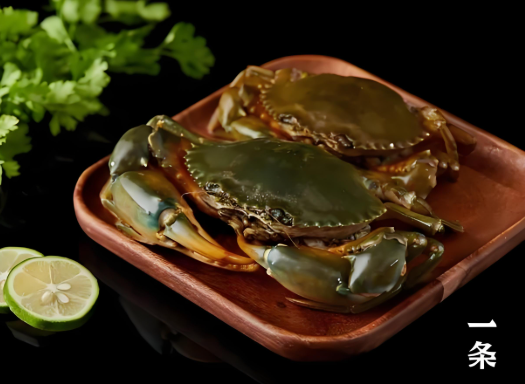
Taishan City, with its topography rising in the middle and declining in the north and south, is a selenium-rich region with a subtropical marine monsoon climate. Located at a low latitude, it boasts abundant sunlight, heat, and water, providing a natural habitat for the migration, habitat, and spawning of various commercial fish and shrimp in the South China Sea. The coastal areas are rich in fish, shrimp, and crabs. Taishan mud crabs are large, golden in color, with tender, white, smooth, and sweet meat. The crab roe is rich and high-quality, with a mellow, smooth, and sweet taste.
On September 1, 2017, the former Ministry of Agriculture of the People's Republic of China approved the registration and protection of "Taishan mud crab" as a national agricultural product with geographical indication protection. On June 9, 2025, the State Intellectual Property Office recognized "Taishan mud crab" as a geographical indication product and implemented protection.