
Fuzhou's ten counties and prefectures boast a wealth of local specialties and famous products, earning them the nickname "Tea, bamboo shoots, and mountain wood are abundant throughout the land," "Fish, salt, and clams are equally abundant," and "When the tides rise, the sea reaches the sky, and fish and shrimp are sold at no cost" (according to the Fujian General History). Fuzhou boasts a wealth of specialties and famous products, including longan, lychees, oranges, olives, hibiscus plums, tea, shiitake mushrooms, bamboo shoots, lotus seeds, fish, shrimp, snails, clams, deer, pheasants, partridges, stone scales, bodiless lacquerware, wood paintings, wood carvings, paper umbrellas, and shell carvings. Fuzhou's cork paintings, Shoushan stone carvings, and bodiless lacquerware, along with Pingtan's shell carvings, are known as the "Three Wonders of Rongcheng." Bodiless lacquerware, along with Beijing's cloisonné and Jingdezhen porcelain, is considered one of the "Three Treasures" of traditional Chinese crafts.
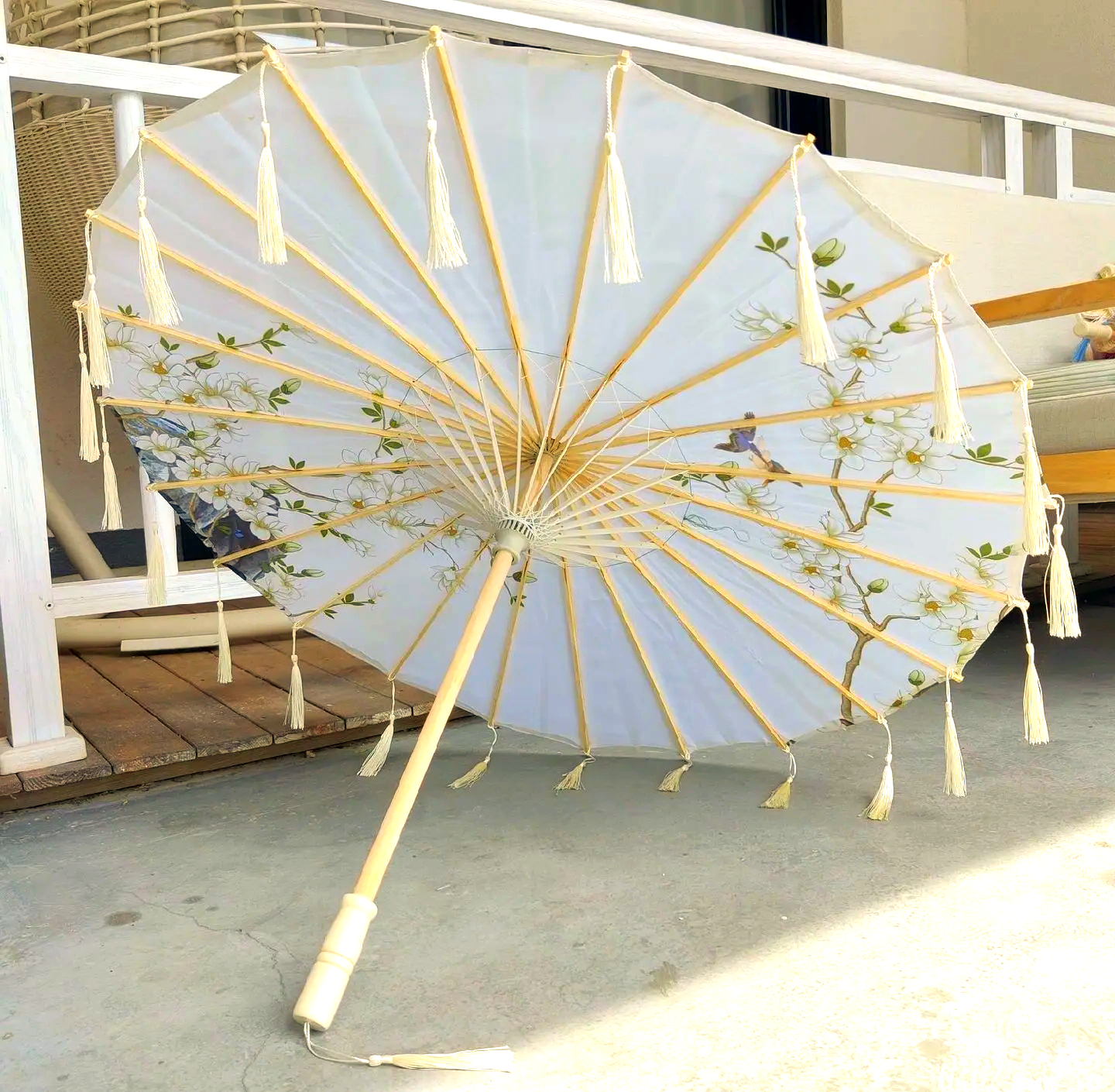
Fuzhou paper umbrellas are a traditional Chinese handicraft and one of Fuzhou's three treasures. The art of making them is said to have been introduced by Wang Shenzhi during his travels south to Fujian during the late Tang Dynasty. Their production requires 83 steps. The ribs are made from aged bamboo from northern Fujian, aged at least five years old, and the umbrella cover is made from cotton paper. Patterns of flowers, birds, landscapes, and figures are painted using techniques such as oil painting and spray painting. They are known for withstanding immersion in water for 24 hours without deteriorating, and are resistant to temperatures approaching 50°C. They can be opened and closed thousands of times without damage. "Oil paper" sounds like "youzi" (meaning "having a son" in Chinese), while the ribs symbolize longevity, and the round shape of the umbrella cover represents reunion.
During the Qianlong reign of the Qing Dynasty, the umbrella industry flourished, ranking among the top three exporters nationwide. By the late Qing and early Republic of China periods, there were over 300 umbrella shops in the city. Yang Changli's Umbrella Shop was renowned for its products, which could withstand 1,170 openings without damage, winning a silver medal at the 1915 Panama World Exposition. In the 1950s, bamboo sawing and other processes were mechanized. In 1960, the company pioneered automated umbrella-making equipment and developed the "snake umbrella" with 40-56 ribs. By the 1980s, monthly production reached 200,000 umbrellas for export to Europe and the United States, and by 1981, exports reached 650,000. In 2015, it was listed as an Intangible Cultural Heritage in Fujian Province, and inheritor Yan Lei established a cultural company to promote the craft.