
In Shijiazhuang, wheat and rice are staple foods. Noodles, dumplings, steamed buns, and pancakes are commonplace. Dishes include pancakes, mixed noodles, heian (presumably a type of glutinous rice cake), potstickers, and fried noodles. Side dishes primarily consist of meat, eggs, milk, seafood, and various vegetables. The people enjoy low-alcohol beverages such as champagne, fruit wine, port wine, and beer. Hebei cuisine is particularly renowned for its elaborate knife techniques, particularly the flinging, chopping, and slicing methods used to slice meat. Dishes like Shijiazhuang's golden lionfish are typical examples of dishes that emphasize meticulous knife work. Techniques vary, with stir-frying being the most renowned. These methods require meticulous attention to heat control, battering, seasoning, and thickening. Due to the prevalence of stir-frying and seafood dishes, Hebei cuisine emphasizes the use of broths, using different types of broth depending on the quality of the dish. The flavor profile is primarily savory and fresh, with a variety of sweet and sour, sweet and fragrant, spicy, and sour and salty flavors.
Zhengding Eight Great Bowls
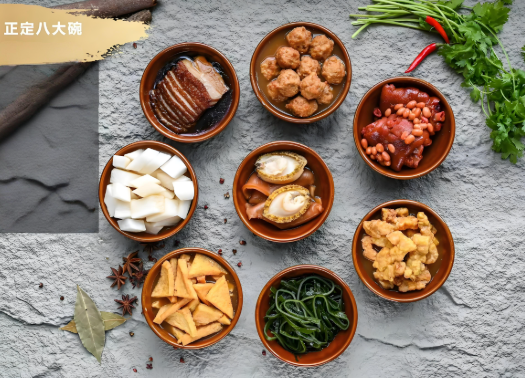
The Eight Great Bowls, a specialty of Zhengding County, are said to have been created by Zhao Zilong, a renowned general during the Three Kingdoms period. The Eight Great Bowls include four meat dishes and four vegetarian dishes. The four meat dishes primarily feature pork, including braised pork elbow, crispy pork, braised pork belly, and square pork. The pork is first boiled whole until nearly cooked through. While still hot, the skin is smeared with honey before deep-frying. The pork slices are then deep-fried until they turn yellowish-reddish. Once the meat has cooled, it is cut into chunks and slices according to the instructions for the four meat dishes. The dishes are then steamed over high heat, the fat drained from the meat, and a broth made from various ingredients is poured into each meat dish. The dishes are then steamed again and served. The four vegetarian dishes feature a variety of main ingredients, primarily tofu, kelp, vermicelli noodles, and radish. The tofu is first cut into triangular slices and deep-fried until golden brown on the outside and tender on the inside. The tofu is then placed in a bowl, topped with the broth, and steamed before serving. The remaining vegetarian dishes can be prepared in advance and simmered in a large pot, or they can be braised in a clear sauce, then placed in a bowl, steamed with the broth, and served.