
Hohhot, located in the western part of the Beijing-Tianjin-Hebei urban agglomeration, is not only a crucial node city connecting the east and west of central and western China, but also an important land bridgehead for China to Russia, Mongolia, and Eastern Europe. As of 2023, Hohhot has established a transportation network primarily based on highways, railways, and aviation. The city's highway network density reaches 50.2 kilometers per 100 square kilometers, ranking second in Inner Mongolia Autonomous Region. The main railway stations are Hohhot Station and Hohhot East Station, with railway lines covering all major cities in China. Hohhot has only one civilian airport, Hohhot Baita International Airport, operating 225 routes to 96 cities.
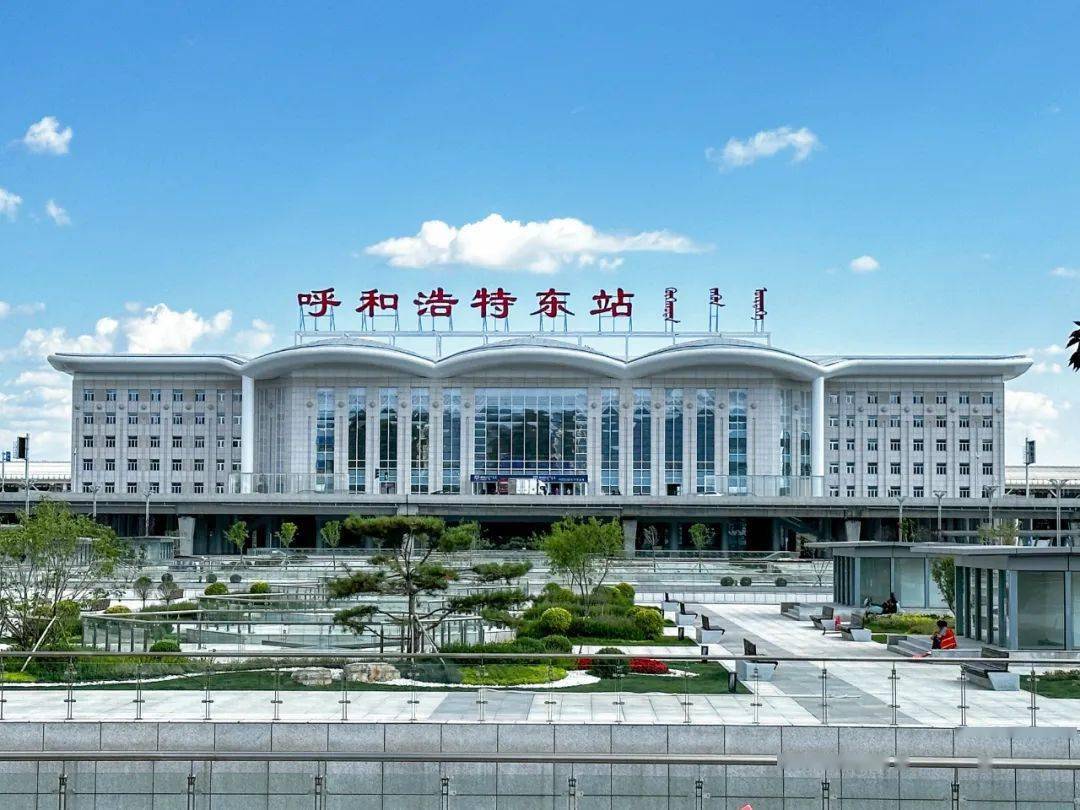
Hohhot East Railway Station (TMIS: 12581) is located in Hohhot, Inner Mongolia Autonomous Region, China. It is a railway station under the jurisdiction of China Railway Hohhot Group Co., Ltd. It is a passenger station for the Beijing-Baotou Railway, Jining-Baotou Railway and Zhangjiakou-Hohhot High-Speed Railway. It is the largest railway passenger station in Inner Mongolia Autonomous Region and the first comprehensive three-dimensional transportation hub in Inner Mongolia Autonomous Region with north and south plazas, two station buildings and multiple channels.
Hohhot is a major aviation hub in northern China. Hohhot Baita International Airport is a regional hub airport in Inner Mongolia Autonomous Region, an important trunk airport in China, an air port airport, and the main alternate airport for Beijing Capital International Airport.
According to the national aviation information data change plan, Hohhot Shengle International Airport is scheduled to open on November 27, 2025, while Hohhot Baita International Airport will close simultaneously. All airlines operating in Hohhot will transfer their operations from Baita Airport to Shengle Airport.
●Hohhot Baita International Airport
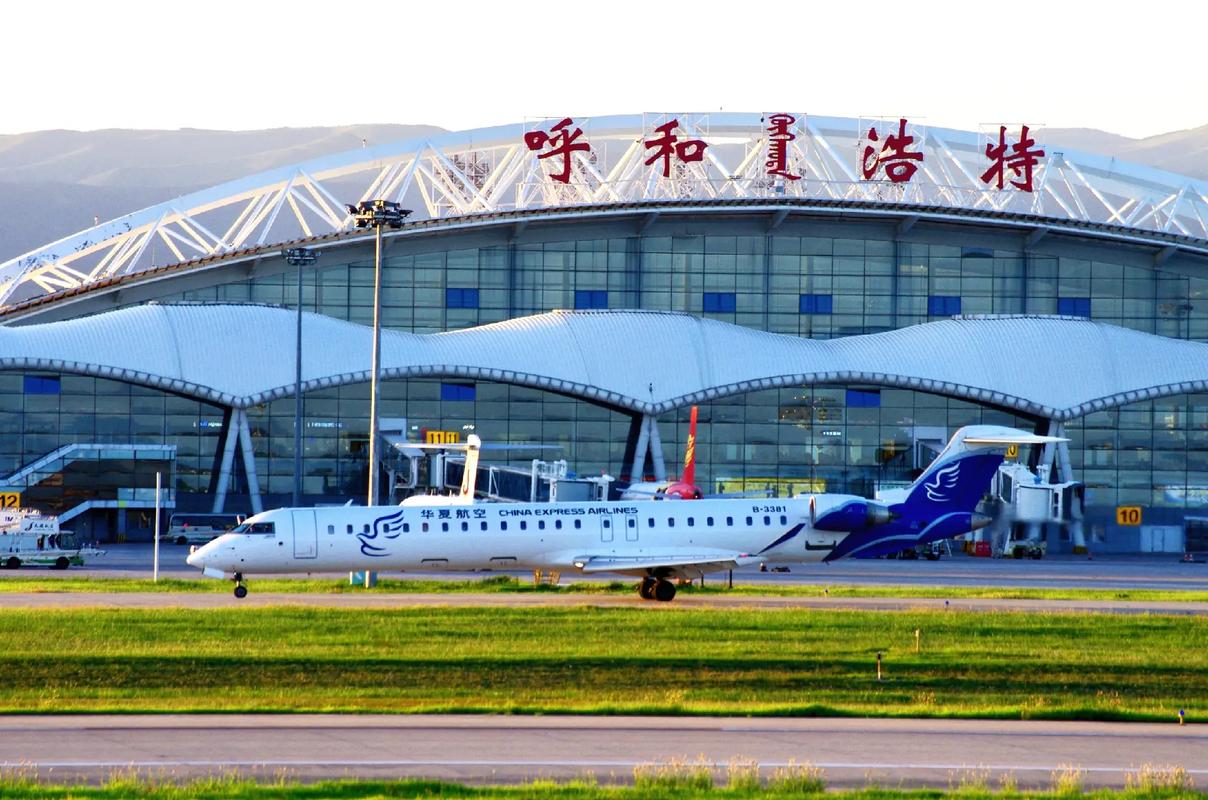
Hohhot Baita International Airport is the capital airport of Inner Mongolia Autonomous Region, located in Saihan District, Hohhot, 14.3 kilometers from the city center. Construction of the airport began on October 1, 1958. It was approved as an air port airport by the State Council on December 1, 1991, and officially opened to the public on March 31, 1992. In 1993, it was officially recognized and announced by the International Civil Aviation Organization (ICAO) as one of China's 14 international scheduled flight airports. On December 27, 2004, it was renamed Hohhot Baita International Airport.
The airport has a 4E flight zone rating, with one 3600-meter-long, 45-meter-wide runway, one 3600-meter-long, 23-meter-wide parallel taxiway, four rapid exit taxiways, five perpendicular connecting taxiways, one bypass connecting taxiway, and 64 aircraft stands. The domestic terminal building has a floor area of 106,000 square meters, 22 jet bridges, 16 remote boarding gates, 48 check-in counters, 24 security checkpoints, and 6 baggage claim carousels. The international terminal building has a floor area of 8,500 square meters, 2 jet bridges, 6 check-in counters, and 2 security checkpoints. In the summer flight season of 2023, Hohhot Airport operated 161 routes, connecting 92 cities in China, of which 73 cities had direct flights. Except for airports in Lhasa, Macau, and Taiwan, airports in provincial capitals and cities with independent planning status all had daily flights. Regional and international routes were planned to connect to cities such as Hong Kong, Bangkok, Nha Trang, Da Nang, and Ulaanbaatar.
Hohhot Shengle International Airport is the relocated airport from Baita Airport. It is the first 4F-level airport in the Inner Mongolia Autonomous Region, the highest level of airport classification. It has three terminals and a 130-stand apron. By 2025, it is projected to handle 22 million passengers and 200,000 tons of cargo and mail.