
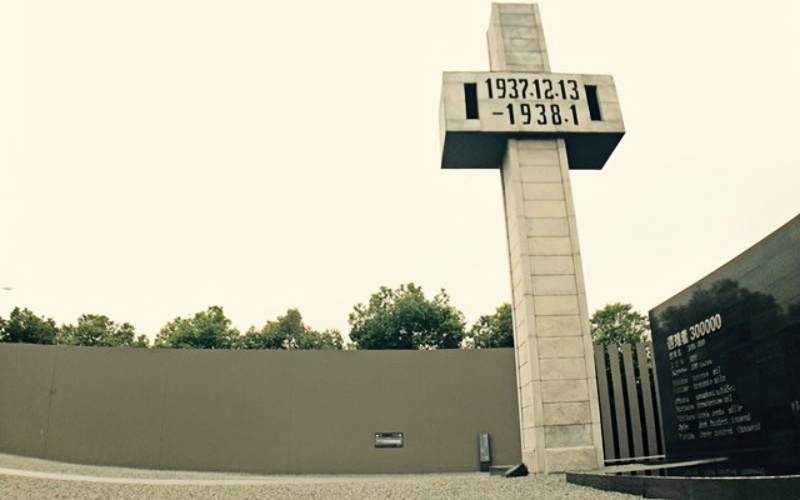
The Memorial Hall for the Victims of the Nanjing Massacre by the Japanese Invaders is a specialized memorial hall built on the site of the collective massacre at Jiangdongmen during the Nanjing Massacre. It was officially completed and opened on August 15, 1985. After more than 30 years of construction and development, it has grown into a Chinese national first-class museum with high international reputation.
At present, the memorial hall includes three basic exhibitions: the historical facts of the Nanjing Massacre by the invading Japanese army, the theme exhibition of "Three Victories", and the exhibition of "Sexual Slaves in World War II - The Japanese 'Comfort Women' System and Its Crimes", showcasing the history of the Nanjing Massacre, the Japanese "Comfort Women" system, and the great victory of the Chinese People's War of Resistance Against Japan. Nearly 4000 photos, 9992 cultural relics, and 262 visual materials were exhibited, expressing the five themes of violence, resistance, victory, trial, and peace in a wise and serious manner. Among them, the camera and image materials used by American pastor John Magee to capture historical footage of the Nanjing Massacre have been included in the UNESCO Memory of the World Register.
There are currently three "mass graves" sites of the Nanjing Massacre in the memorial hall, displaying the remains of compatriots who died in 1984, 1998-1999, and 2006. In December 2015, after the completion of the "Three Victories" new exhibition hall and its branch, the Nanjing Liji Lane Comfort Station Old Site Exhibition Hall, the memorial hall covered a total area of 103000 square meters, with a building area of 57000 square meters and an exhibition area of 20000 square meters. There are 7 squares, 23 individual sculptures and one large composite sculpture, 8 various forms of walls, and 17 steles of various shapes distributed.
The Memorial Hall is a comprehensive museum dedicated to the history of the Nanjing Massacre, the Japanese "comfort women" system, and the victory of the World Anti Fascist War. A large number of cultural relics, photos, historical testimonies, video materials, archives, and sites provide a complete exposition of historical truth. Every year, funds are invested to assist survivors of the Nanjing Massacre, victims of the "comfort women" system, and veterans of the Anti Japanese War.
Travel Tips
Address: 418 Shuiximen Street, Jianye District, Nanjing City
Tel: 025-86612230
Opening hours: Tuesday to Sunday 08:30-17:30; Not open all day on Monday