
Braised Noodles
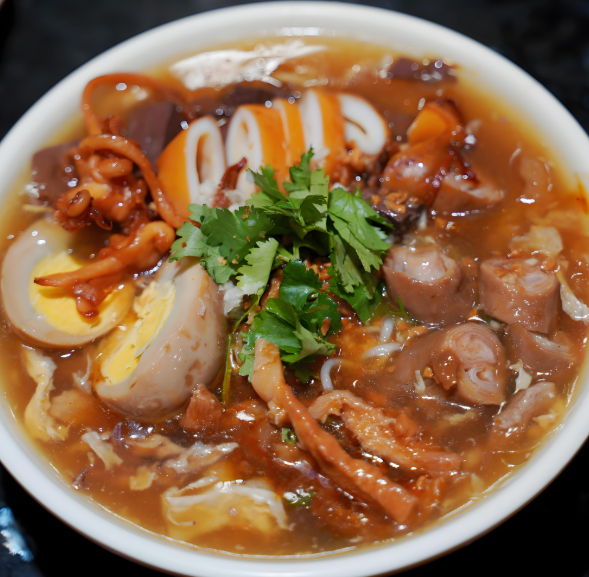
A renowned snack in Zhangzhou, braised noodles boast a history of over 1,300 years. According to the "Zhangzhou Prefecture Chronicle," during the reign of Emperor Gaozong of the Tang Dynasty, General Chen Zheng of Guide and his son Chen Yuanguang entered Fujian and opened up Zhangzhou, bringing with them a large number of military families and clan members. Most of these people were originally from Gushi County in Henan Province, hence their love of noodles.
Fa Kuai
Fa Kuai is a traditional Chinese food eaten by every household during the Chinese New Year and other festivals. It is typically prepared during major festivals such as the Winter Solstice and Spring Festival, or during important ceremonies dedicated to the gods. Glutinous rice is soaked in water and ground into a paste. Sugar and baking powder are added, mixed, and poured into a bowl. Steamed in a steamer until cooked, the paste is ready. The most distinctive feature of fa Kuai is that the surface, cracked by the fermentation of the baking powder, resembles a blooming flower. Sometimes, the petals are dotted with a hint of red. The larger the fa Kuai, the deeper the cracks, symbolizing prosperity and good fortune, representing greater prosperity. In ancient times, eating fa gao during the Lunar New Year was a tradition for good luck. The word "fa gao" sounds like "get rich" and "rise," and because fa gao symbolizes wealth and prosperity, it is a popular favorite.
Hehe Bao
"One City, One Flavor" - Zhangzhou Cuisine
The word "hehe" (harmony) often appears in wedding couplets. It represents a mythological deity symbolizing the love between husband and wife, depicted as a lotus and a box. Harmony has always been a central theme in Chinese emotional life. The Minnan people, who value good fortune, chose the homophonic meaning of "hehe" (harmony) to symbolize harmony and reconciliation. The name "hehe bao" alone is endearing. The wrapper of a "hehe bao" resembles a lotus leaf, made from finely fermented flour and steamed. Like open bags, they are stacked on a plate, with a pre-prepared sweet filling placed nearby. Diners open the bags and fill them with the filling before eating, making it both unique and convenient.