
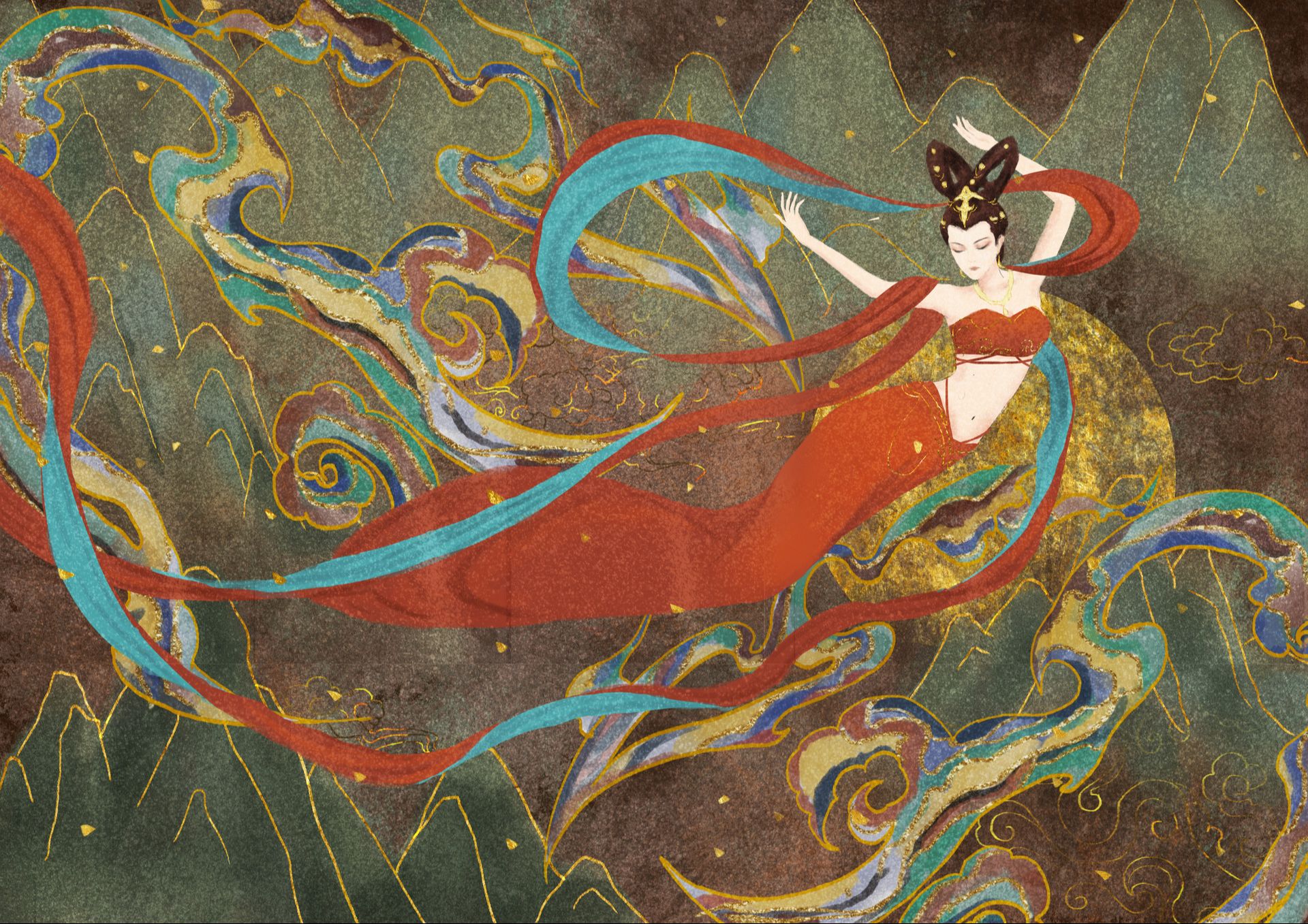
Dunhuang has a long history and splendid culture. Dunhuang's religious culture is rich and profound, renowned both domestically and internationally. It is mainly condensed in the colored sculptures, murals, and scriptures of the Mogao Grottoes, as well as in other religious buildings and local landscapes in Dunhuang.
Dunhuang History
Dunhuang has a long and ancient history. Dunhuang was once a hub of transportation between China and the West, a key gateway on the Silk Road, an international metropolis for foreign exchanges, and a military stronghold in the Western Regions. It has written a glorious chapter in the long history of China. Dunhuang was formerly known as' Sanwei '. To this day, there are three towering and unique mountain peaks in the southeast of Dunhuang City, which are known as the ancient Three Dangs. It is still called Sanwei Mountain today.About 4000 years ago, during the ancient period equivalent to the Shunyu era, human ancestors had already thrived and thrived in the Dunhuang region...More
Dunhuang Clture
Dunhuang is located at the intersection of Han, Tibetan, Mongolian, and Uyghur ethnic groups, as well as at the intersection of Xinjiang Islam, Tibetan Buddhism on the Qinghai Tibet Plateau, and the distribution of Buddhism in the Hexi and Central Plains. Most locals believe in Buddhism, and on the first and fifteenth day of the lunar new year, the Mogao Caves and Leiyin Temple are bustling with incense.
 |
||
| Mogao Grottoes Murals |
The majority of the permanent population in Dunhuang are Han Chinese, including several ethnic minorities such as Hui, Mongolian, Tibetan, Uyghur, Miao, Manchu, Tujia, Kazakh, Dongxiang, Yugu, etc.